
Grow smarter, faster, cleaner
India’s first scalable aeroponics platform.
A decade of deep R&D turned into one integrated platform — growing systems, mechanisation and controls — that makes a farm a repeatable production unit rather than a one-off project.
The platform
What is the Growize tech stack?
Growize combines Airo360 growing systems, mechanisation, and automation/IoT controls into one integrated platform — designed to make farms repeatable production units, not one-off projects.
The growing system
Airo360
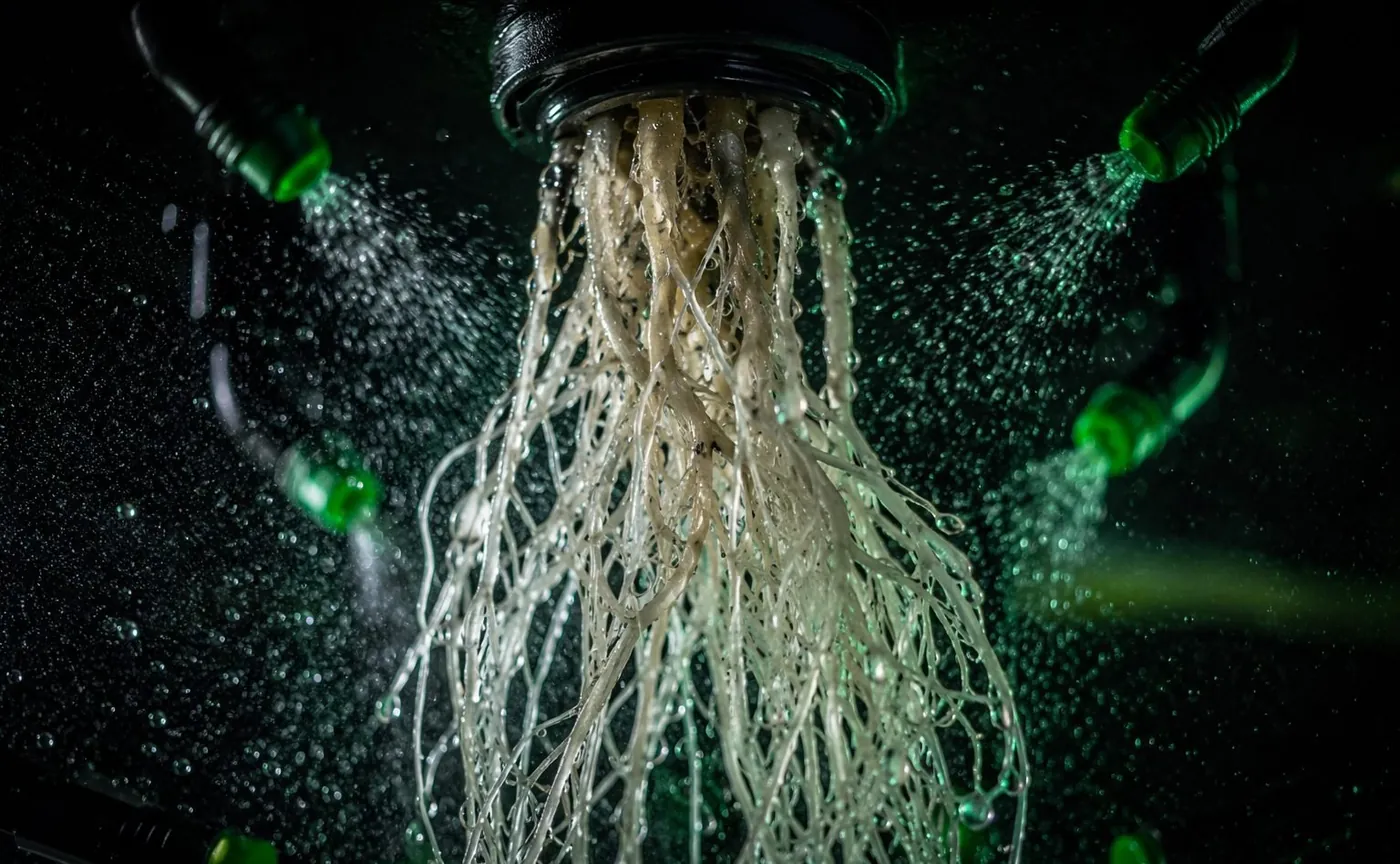
The aeroponic core. Roots are suspended in air and fed a fine nutrient mist on a controlled cycle, so the plant takes exactly what it needs and the rest is recirculated instead of drained into soil.
The physical layer
Mechanisation
Propagation, transplanting, harvest handling and dispatch are engineered as repeatable operations rather than manual craft — which is what lets one trained team run an acre reliably, week after week.
The control layer
Automation & IoT
Climate, nutrient dosing, misting intervals and crop-stage data are monitored and adjusted continuously. The farm reports on itself, which is also what feeds your investor dashboard.
Performance built for scale
Global benchmark output, engineered for India.
Built on a decade of deep R&D, Growize is designed to deliver global benchmark throughput for leafy vegetables while staying commercially viable under Indian operating conditions.
Those two goals usually pull against each other. Hitting benchmark yield is straightforward if cost is no object; staying cheap is straightforward if yield is no object. The engineering is in holding both at once, cycle after cycle.
95%
Less water
300%
Higher yield
12
Harvest cycles a year
10 yrs
Of R&D behind it
Built for Indian realities
Re-engineered from first principles.
Most controlled-environment agriculture in India is a European or American system shipped over and hoped for. Growize was designed the other way round — starting from what makes farming here hard.
Heat and humidity swings
A greenhouse tuned for a Dutch summer fails in a Karnataka one. Climate control, airflow and misting are specified for the range Indian weather actually delivers, not an average.
Power variability
Systems are designed to ride out the interruptions that are normal here rather than assuming a grid that never blinks. A crop cycle should not depend on an uninterrupted month.
Local crop cycles
Nutrient recipes and light schedules are built around leafy greens, herbs and vegetables that Indian kitchens and Indian buyers want — not imported varieties that merely survive here.
Market price sensitivity
Output has to clear at Indian shelf prices. Every engineering decision is weighed against the cost it adds per kilo, because a farm that only works at premium pricing is not solving the problem.
Indian economics
Capital cost, labour availability, servicing and spares are all local. The platform is specified so it can be built, staffed and maintained here, at a cost that closes.
Not vertical farming. Not artificially lit.
Growize uses natural sunlight and smart greenhouse engineering, delivering high output at low cost — without the energy intensity of artificial-light vertical farming.
Growize
Sunlit greenhouse aeroponics
- Light source: Natural sunlight, free at the point of use
- Energy load: Climate control and pumps only
- Cost per kilo: Low enough to clear at Indian shelf prices
- Scale limit: Bounded by land, which India has
The alternative
Artificially-lit vertical farming
- Light source: LED arrays, running on grid power
- Energy load: Lighting dominates the energy bill
- Cost per kilo: Usually needs premium pricing to work
- Scale limit: Bounded by power, which is expensive
Future proof agriculture
A climate-resilient farming platform built for India’s next decade — supporting food security, reducing ecological pressure, and enabling clean food production at scale.
See the platform running.
The fastest way to understand any of this is to stand inside it. Site visits run Tuesday to Sunday, near Bangalore.